

Table of Contents
What is Business Model Innovation?
Business model innovation is defined as the process of creating, modifying, or defining the fundamental structure and components of a business model to create new value propositions, capture new market opportunities, and gain a competitive advantage. It involves developing innovative ways to generate revenue, deliver products or services, and create and capture customer value.
Traditional business models typically consist of various elements such as target customer segments, value propositions, distribution channels, revenue streams, key activities, resources, and cost structure. Business model innovation challenges existing assumptions, norms, and industry practices to explore new avenues for growth and profitability.
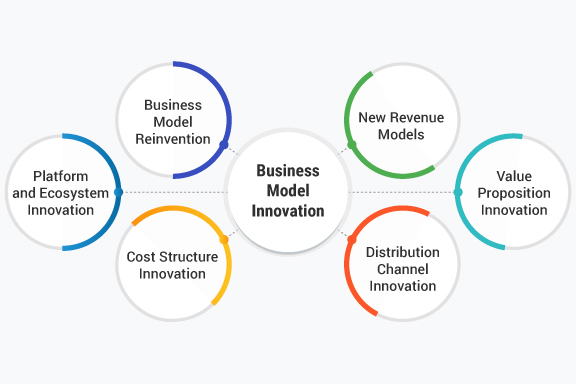
Business Model Innovation Forms:
Business model innovation is essential in today’s dynamic and rapidly changing business environment. It enables companies to adapt, stay relevant, and seize new opportunities, particularly in the face of digital innovation, disruptive technologies, and evolving customer expectations. Successful business model innovation can lead to improved competitiveness, increased market share, higher profitability, and sustainable growth.
- New Revenue Models: Introducing novel ways of generating revenue, such as subscription-based models, freemium models, licensing, or pay-per-use.
- Value Proposition Innovation: Developing innovative products, services, or features that offer unique benefits to customers and differentiate the business from competitors.
- Cost Structure Innovation: Identifying cost-saving opportunities, optimizing resource allocation, or leveraging technology innovation to reduce costs and improve profitability.
- Distribution Channel Innovation: Finding new channels or leveraging existing ones in innovative ways to reach customers more effectively and efficiently.
- Platform and Ecosystem Innovation: Building platforms or ecosystems that connect different stakeholders and create value through network effects and collaborations.
- Business Model Reinvention: Completely reimagining the business model to adapt to changing market conditions, emerging trends, or disruptive innovation.
Importance of Business Model Innovation
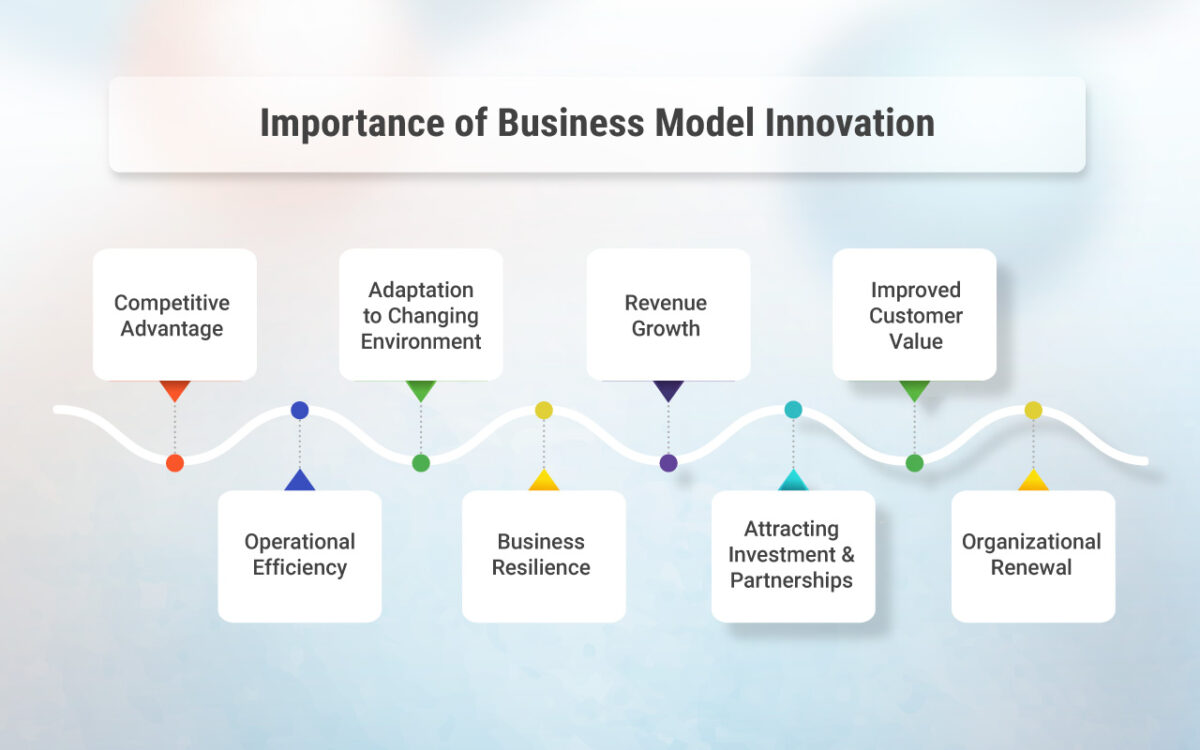
Business model innovation is crucial for companies to remain competitive, respond to market changes, and create sustainable growth. It enables companies to deliver enhanced value to customers, optimize operations, and seize new opportunities, ultimately driving long-term success in a rapidly evolving business landscape. Business model innovation is significantly important for businesses due to the following reasons:
1. Competitive Advantage
Business model innovation allows companies to differentiate themselves from competitors by offering unique value propositions, exploring untapped market segments, or leveraging emerging technology innovation. It enables businesses to gain a competitive edge and stay ahead in the market.
2. Adaptation to Changing Environment
Business environments are subject to constant change, driven by technological advancements, evolving customer preferences, regulatory shifts, and market disruptions. By innovating their business models, companies can adapt to these changes, mitigate risks, and capitalize on emerging opportunities.
3. Revenue Growth
Effective business model innovation can lead to new revenue streams or increased revenue generation. By exploring new business models or modifying existing ones, companies can tap into previously unexplored markets, attract new customers, and capture additional value from their existing customer base.
4. Operational Efficiency
Optimizing and innovating the various components of a business model can lead to increased operational efficiency. By streamlining processes, leveraging technology, digital innovation, and optimizing resource allocation, companies can reduce costs, improve productivity, and enhance overall performance.
5. Improved Customer Value
Through business model innovation, companies can elevate the value they deliver to customers. By understanding customer needs and pain points, businesses can develop innovative value propositions, personalized experiences, and tailored solutions that meet customer expectations and create long-term loyalty.
6. Business Resilience
A well-designed and innovative business model is more likely to withstand market disruptions and economic downturns. By diversifying revenue streams, exploring alternative business models, or building resilient ecosystems, companies can improve their ability to navigate uncertainties and maintain long-term sustainability.
7. Organizational Renewal
Business model innovation promotes a culture of innovation, creativity, adaptability, and continuous improvement within organizations. It encourages employees to think outside the box, challenge conventional wisdom, and contribute to the ongoing evolution of the business. This fosters a dynamic and innovative organizational culture.
8. Attracting Investment and Partnerships
Business model innovation often attracts the attention of investors, partners, and stakeholders who recognize the potential for growth and profitability. Innovative business models demonstrate a forward-thinking approach and can enhance a company’s attractiveness for funding, partnerships, and strategic alliances.
Learn more: What is Continuous Innovation?
Business Model Innovation Framework: Key Components
When approaching business model innovation, several frameworks and key components can guide the process. Here are some commonly used components in a business model innovation framework:
- Value Proposition: This component defines the unique value that a business offers to its customers. It encompasses the products, services, features, and benefits that address customer needs, solve their problems, or fulfill their desires.
- Customer Segments: Identifying and understanding the target customer segments is crucial for effective business model innovation. It involves analyzing customer feedback, behaviors, preferences, and pain points to tailor the value proposition and business model accordingly.
- Revenue Streams: This component focuses on how the business generates revenue from its value proposition. It includes pricing strategies, revenue models (e.g., one-time sales, subscriptions, licensing), and potential sources of income from customers, partners, or other stakeholders.
- Channels: Channels represent the distribution and communication channels used to reach and engage customers. This component considers both physical and digital channels, such as direct sales, online platforms, retail partnerships, or mobile applications.
- Innovation Mechanisms: This component focuses on fostering a culture of innovation within the organization and implementing mechanisms to encourage and support business model innovation. It can involve innovation processes, idea platforms, cross-functional teams, experimentation, or learning loops.
- Key Activities: Key activities encompass the core processes, operations, and actions required to deliver the value proposition effectively. It includes activities such as research and development, manufacturing, marketing, sales, customer support, and strategic partnerships.
- Key Resources: Key resources refer to the essential assets, capabilities, and infrastructure needed to operate the business model. These resources can include physical assets, intellectual property, technology, human capital, supplier networks, or financial resources.
- Innovation Drivers: The external and internal factors that push a company to reconsider and evolve its business model to remain competitive, relevant, and adaptable in the ever-changing business landscape. Identify the factors driving the need for business model innovation, such as technological innovation, changes in customer behavior, or industry disruptions.
- Partnerships and Ecosystems: This component involves identifying and leveraging strategic partnerships or building ecosystems that complement the business model. Collaborations with suppliers, distributors, technology providers, or complementary businesses can enhance value delivery and create new opportunities.
- Cost Structure: The cost structure defines the expenses associated with operating the business model. It includes costs related to production, marketing, distribution, infrastructure, talent, and any other resources required to deliver the value proposition.
12 Key Examples of Business Model Innovation
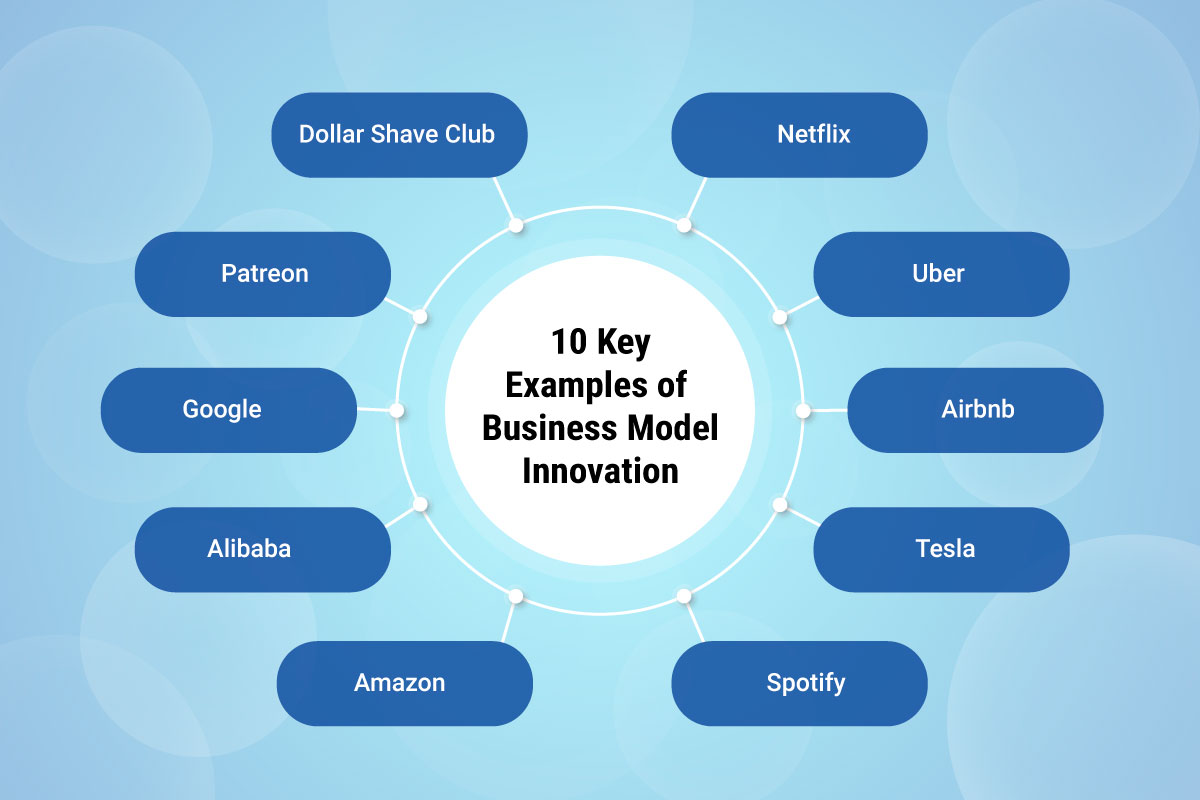
There are numerous examples of business model innovation across various industries. These examples illustrate how business model innovation can lead to industry disruption, improved customer experiences, and increased efficiency. Adapting to changing market dynamics and exploring innovative business models can be key to long-term success.
- Netflix (Transforming Entertainment Distribution): Netflix revolutionized the home entertainment industry by introducing a subscription-based model for streaming movies and TV shows. Instead of traditional DVD rentals, Leveraging technology innovation they shifted to a digital platform that allows users to access content on-demand for a monthly subscription fee.
- Uber (Disrupting Transportation Services): Uber disrupted the transportation industry by introducing a peer-to-peer ride-sharing platform. They created a business model that connects riders and drivers through a mobile app, providing convenient, affordable, and flexible transportation services.
- Airbnb (Redefining Accommodation): Airbnb transformed the hospitality industry by offering a platform that allows individuals to rent out their homes or spare rooms to travelers. They created a marketplace that connects hosts and guests, enabling people to find unique and affordable accommodations worldwide.
- Apple (Integrated Ecosystem): Apple’s business model revolves around an integrated ecosystem of hardware, software, and services. Products like the iPhone, MacBook, and Apple Watch seamlessly work together, creating a cohesive user experience.
- Tesla (Electric Vehicles and Beyond): Tesla disrupted innovation in the automotive industry by introducing electric vehicles (EVs) with a vertically integrated business model. They not only manufacture and sell EVs but also build and operate their own charging infrastructure, providing a comprehensive solution for sustainable transportation.
- Spotify (Transforming the Music Industry with Streaming): Spotify changed the music industry with its streaming service that offers access to a vast library of music. They introduced a freemium model, providing both free and premium subscription options, while compensating artists based on streaming plays.
- Amazon (E-commerce Ecosystem): Amazon transformed e-commerce by creating a comprehensive online marketplace that offers a wide range of products, competitive prices, and fast delivery. They also introduced Prime membership, providing additional benefits like free shipping and access to streaming services.
- Alibaba (E-commerce Ecosystem): Alibaba revolutionized e-commerce in China by creating a business-to-business (B2B) online marketplace that connects manufacturers with buyers. They expanded their business model to include business-to-consumer (B2C), consumer-to-consumer (C2C), and other services like digital innovation such as cloud computing and digital payments.
- Google (Monetizing Search and Advertising): Google’s business model innovation lies in its search engine and advertising platform. They provide free access to their search engine while generating revenue through targeted advertising based on user data and search queries.
- Patreon (Empowering Creators with Fan Support): Patreon introduced a membership platform that allows creators, such as artists, musicians, and podcasters, to receive ongoing financial support from their fans. It enables fans to become patrons and support their favorite creators through this innovation.
- Dollar Shave Club (Subscription-based Razors): Dollar Shave Club disrupted the shaving industry by offering a subscription-based model for razors and grooming products. They eliminated the need for purchasing expensive razors in stores and instead provided affordable, high-quality products delivered directly to customers’ doors.
- IKEA (Flat-Pack Furniture and In-Store Experience): IKEA’s business model innovation includes flat-pack, self-assembled furniture and a unique in-store experience. This approach allows for cost savings and a distinctive shopping environment.
Learn more: What is Discontinuous Innovation?
Top 10 Best Practices for Business Model Innovation
When engaging in business model innovation, it’s important to follow certain best practices to increase the chances of success. Outlined below are several essential best practices to consider:
1. Customer-Centric Approach
Start by deeply understanding customer needs, pain points, and behaviors. Identify unmet needs and gaps in the market to develop innovative solutions that deliver superior value to customers.
2. Embrace a Growth Mindset
Foster a culture of continuous innovation like learning and experimentation. Encourage employees to challenge assumptions, take calculated risks, and learn from failures. Embrace an entrepreneurial mindset that embraces change and seeks out new opportunities.
3. Collaborative and Cross-Functional Approach
Involve diverse perspectives from different teams and departments within the organization. Collaborate across functions to generate innovative ideas, validate assumptions, and ensure alignment and buy-in throughout the organization.
4. Data-Driven Decision Making
Leverage data and analytics to inform decision-making processes. Gather insights on customer feedback, behavior, market trends, and industry dynamics to support business model innovation efforts. Use data to validate assumptions and iterate on the business model.
5. Iterative and Agile Approach
Adopt an iterative approach to business model innovation. Start with small experiments, test assumptions, gather feedback, and iterate based on the results. Embrace agile methodologies to quickly adapt and respond to changing market dynamics.
6. External Insights and Open Innovation
Look beyond internal resources for inspiration and insights. Engage with external stakeholders, such as customers, partners, industry experts, and academia, to gain diverse perspectives and identify emerging trends and technologies that can drive innovation.
7. Prototyping and Minimum Viable Products (MVPs)
Develop prototypes or MVPs to quickly test and validate different aspects of the business model. Use rapid prototyping techniques to gather feedback from customers and stakeholders and make necessary refinements before scaling.
8. Intellectual Property Protection
Evaluate the intellectual property (IP) aspects of the business model to protect any unique innovations or competitive advantages. Secure patents, trademarks, copyrights, or trade secrets where appropriate to safeguard the business model and prevent imitation.
9. Scalability and Long-Term Viability
Consider scalability and long-term viability when designing the business model. Ensure that the model can be effectively scaled as the business grows and that it aligns with the organization’s strategic goals and capabilities.
10. Continuous Monitoring and Adaptation
Business model innovation is an ongoing process. Continuously monitor market trends, customer feedback, and competitive landscape to identify opportunities for refinement and adaptation. Stay agile and be prepared to adjust the business model as needed to maintain relevance and competitiveness.
Learn more: What is Business Innovation?
